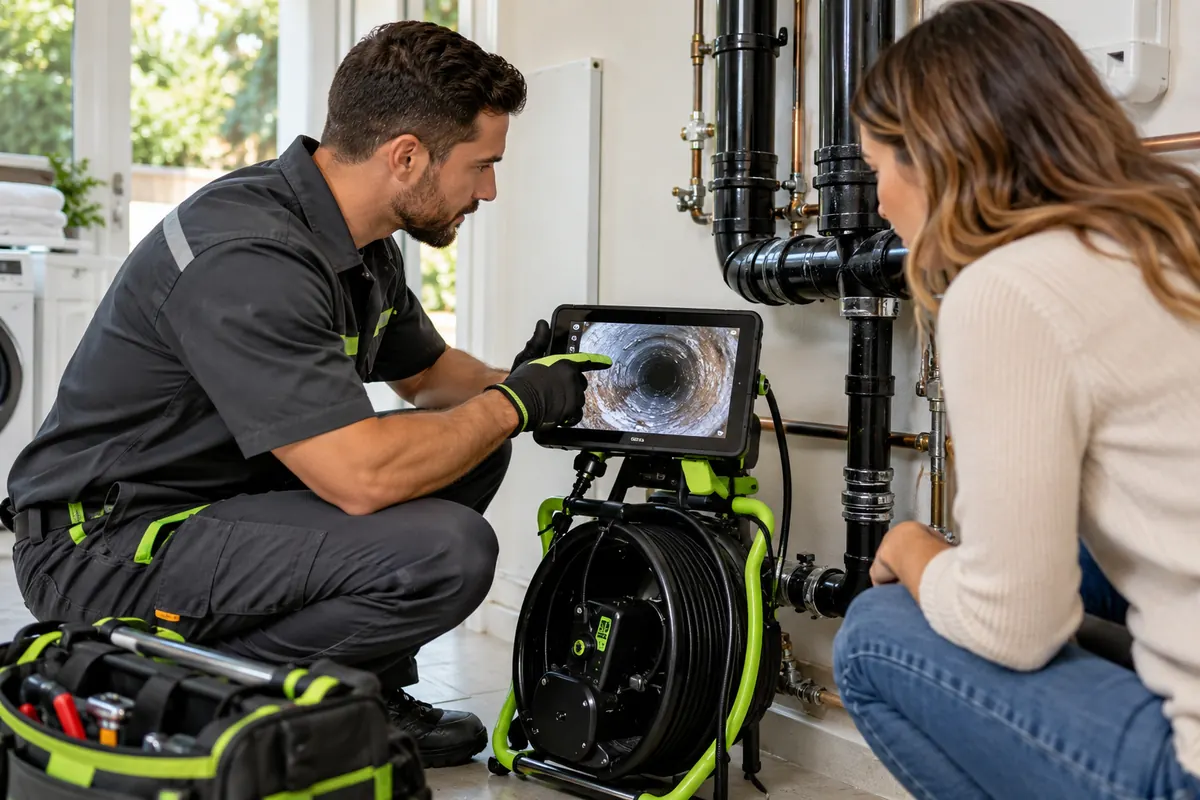
Hair, soap residue and everyday debris can slow bathroom drains over time. A useful assessment considers the fixture, how quickly water backs up and whether the issue appears elsewhere in the property.
Drain clearing for bathroom sinks, tubs and shower drains affected by hair, soap residue and recurring blockages.
Common bathroom drain symptoms
A shower that pools water while a nearby sink works normally may point to a local fixture drain. If a toilet, tub and other fixtures show symptoms around the same time, a shared branch or larger line may need attention. Describe the whole pattern before choosing a cleaning approach.
Details to share when you call
Remove visible debris from a stopper or strainer only if safely accessible.
Avoid mixing chemical drain products or repeatedly applying different cleaners.
Note whether nearby fixtures gurgle or back up when another fixture is used.
Keep the cleaning method appropriate
The right approach depends on restriction location, pipe condition and access. A repeating clog can merit a closer look rather than another temporary clear. If a larger line issue is suspected, line assessment or camera inspection may be recommended.
Common questions
What usually causes a slow shower drain?
Hair and soap residue are common causes, though a restriction farther down the line is also possible.
Should I use multiple drain chemicals?
No. Mixing or layering chemical products can create dangerous reactions and may damage plumbing.
What if the shower and toilet are both affected?
Multiple affected fixtures can suggest a shared drainage problem. Stop adding water and contact a drain professional.
How to decide whether bathroom drain cleaning fits the problem.
This guide explains the decision points to discuss with a service professional. The correct scope depends on the actual property, line condition and the symptoms observed.
Start with a useful diagnosis
A bathroom sink, shower and tub do not always share the same branch. Hair and soap residue can restrict a local drain, while simultaneous problems in multiple fixtures may indicate a shared section. Describe which fixture is slow, whether water rises elsewhere, whether the problem appears only when another fixture is used, and whether odours or gurgling occur.
What the method can and cannot do
A removable stopper or hair catcher may be accessible to a homeowner, but deeper blockages can require different tools and access. Repeated use of chemical drain openers can create handling hazards and may not resolve the cause. A service provider should match the method to the obstruction, the fixture and the pipe condition. If the issue returns quickly, explain that history rather than asking for the same temporary fix without further assessment.
Information to share before the visit
Stop using the affected fixture if water is close to overflowing, keep the floor area clear and note any previous product used. Never mix drain chemicals. For a rental property, clarify whether maintenance approval is required and share whether the issue is limited to one bathroom.
List every affected fixture, including drains that still work normally.
Describe when the symptoms began and how frequently they return.
Share access restrictions, prior service records and known pipe details.
Ask what is included and how the proposed result will be explained.
Common questions about bathroom drain cleaning
What should I tell the service team about bathroom drain cleaning?
Describe the affected fixture or line, how long the problem has been present, whether it recurs and what work has already been attempted. Include address-based access details and any known pipe reports.
Does this service guarantee that the issue will never return?
No responsible service description can promise that without knowing the cause and condition of the system. Ask what the work addresses, what it cannot establish and what follow-up may be appropriate.
How is the method selected?
The choice depends on symptoms, obstruction, access and pipe condition. Ask why the proposed method fits the observed problem and whether inspection is needed before cleaning or repair.
Will the price change if the scope changes?
Ask what is included, which conditions may affect the scope, and whether approval will be requested before additional work proceeds.
Related services
Some jobs require more than one step. Compare connected options and choose based on findings rather than selecting the most intensive method by default.
Identify whether the affected fixture is a shower, tub, basin or toilet, and whether water drains slowly, backs up or produces unusual sounds. Avoid using multiple fixtures to test a bathroom line while water is already backing up. After service, follow any site-specific advice and note if the same symptom returns. A repeated blockage can have several causes, so the right next step depends on where it occurs, the history and what the technician can observe. Keep any scope or inspection notes for a future visit.
How to compare the next-step options
For bathroom drain cleaning with a clear next step., compare proposals against the actual reported problem and the part of the system included. Ask what the provider has directly observed, what remains uncertain, and whether the proposed method is intended to clear a restriction, inspect the pipe or address a physical defect. These are different objectives. Request a plain-language explanation of why the method fits the available evidence, what access is required, how the result will be checked and what conditions could change the scope.
Property access and coordination
Provide the full address, access notes, the location of any known cleanout and whether a tenant, landlord, building manager or facilities contact needs to approve work. Shared buildings, older plumbing and commercial spaces may have different operating constraints, access rules and downtime concerns. For larger work, verify permit and inspection requirements with the relevant local authority or qualified professional rather than assuming one rule applies throughout California.
What to keep after the service
Save the service date, symptoms, approved scope, findings, invoice, and any inspection images or recordings provided. Note whether the original problem improved and how long the improvement lasted. If it returns, describe the timing and affected fixtures so the next assessment can determine whether the same section or a different cause should be investigated. Good records support decisions, but they should not be used to claim that a defect exists unless it was actually observed.
Questions to ask before approving work
Which line or fixture is included in the quoted scope?
What finding supports the recommended method?
What is excluded, and how will changes to the scope be approved?
How will the result be checked and documented?
What follow-up is recommended if symptoms return?
Different bathroom fixtures can point to different issues
A slow basin, shower, tub and toilet are not interchangeable symptoms. Note exactly which fixture is affected, whether other fixtures change when it is used and whether water or odour appears elsewhere. If several fixtures back up, describe the pattern before trying another fixture. Avoid mixing drain products or dismantling fixtures if you are not equipped to do so safely. The aim is to give the provider accurate symptom information, not to diagnose the pipe from a checklist.
What to check after cleaning
Follow any instructions from the service provider, then observe ordinary fixture use. Clean accessible strainers and reduce hair or other material entering the drain where appropriate. If the original symptom reappears, record how quickly it returned and whether it is identical to the first problem. Repetition can be important diagnostic evidence, so describe the timeline instead of assuming the same remedy should simply be repeated.
Communication in shared bathrooms
In rental homes, hotels and multi-unit buildings, different occupants may see different parts of a plumbing issue. Ask the manager to collect the unit, fixture and time of each report and to communicate access arrangements. A common symptom across units should be assessed in the context of the building’s layout. Preserve any earlier service records so the next visit can determine what has already been inspected or cleaned.
Questions to have answered before approval
Which fixture or pipe section is included in the proposed service?
What observation or history supports the recommended method?
What is excluded, and how will a changed scope be approved?
What result will be checked and documented after the work?
What follow-up is appropriate if the original symptom returns?
A CLEARER NEXT STEP
Discuss the symptoms and service options
Call to describe the issue and confirm the appropriate next step for your property.