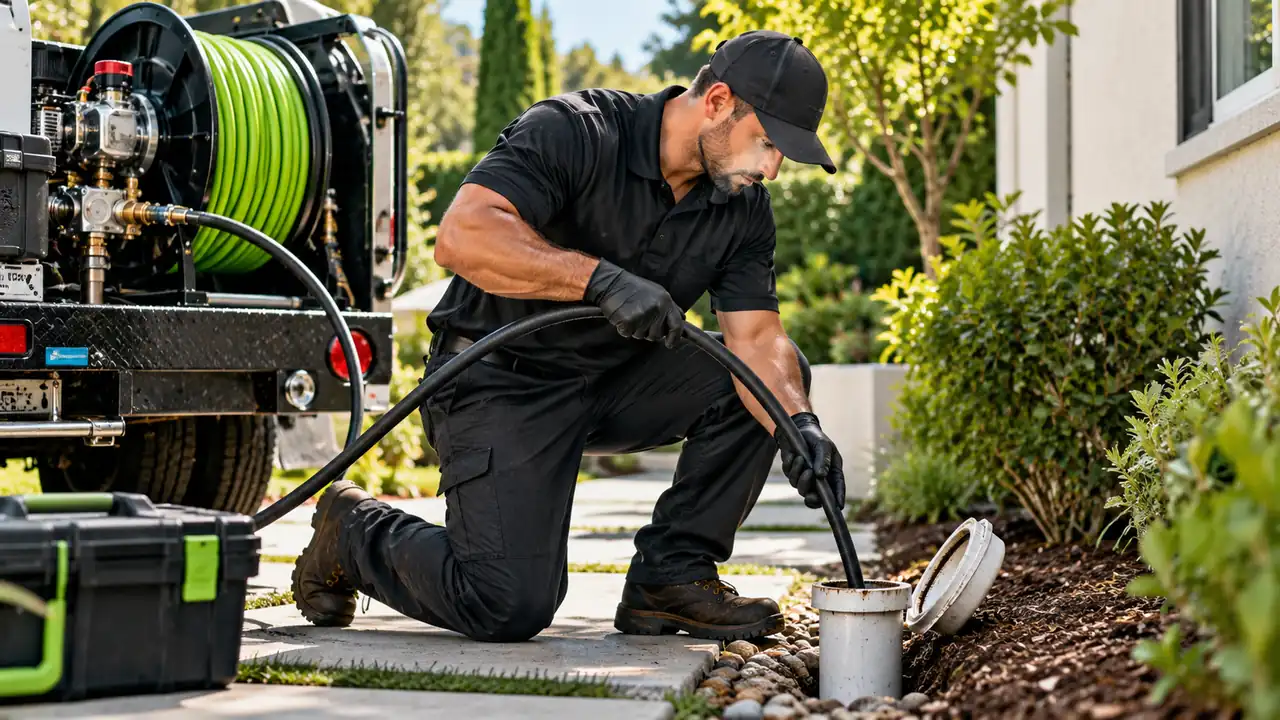
Hydro jetting uses controlled high-pressure water to clean suitable pipe interiors. It can be an option for certain grease, sludge and debris restrictions, but pipe condition should be considered before the method is chosen.
High-pressure water cleaning for suitable lines where buildup or debris needs a more thorough cleaning method.
What hydro jetting is designed to do
A jetting nozzle directs water through a line to loosen and flush away suitable buildup. It is different from simply pushing through one point of obstruction. The method may be useful in appropriate lines, but it is not an automatic recommendation for every clog or every pipe material.
Details to share when you call
Describe the blockage and how often it returns.
Share pipe material, age or prior damage if known.
Ask whether inspection is advisable before high-pressure cleaning.
Safety and pipe condition come first
A line that is deteriorated, broken or otherwise vulnerable may require a different approach. The decision should account for pipe condition, available access and the nature of material in the line. Ask what the method is expected to address and what signs would trigger further inspection.
Common questions
Does hydro jetting work for every drain clog?
No. Its suitability depends on pipe condition, access and what is causing the restriction.
Is hydro jetting the same as snaking?
No. Snaking typically works at an obstruction with a cable tool; hydro jetting uses pressurized water to clean suitable pipe surfaces and flush debris.
Should I get an inspection first?
When condition is uncertain, damage is suspected or a blockage recurs, inspection may be sensible.
How to decide whether hydro jetting services fits the problem.
This guide explains the decision points to discuss with a service professional. The correct scope depends on the actual property, line condition and the symptoms observed.
Start with a useful diagnosis
Hydro jetting uses controlled high-pressure water delivered through a purpose-built hose and nozzle. Whether it is suitable depends on line material, access, the suspected obstruction, existing pipe defects and the condition of the line. A recurring clog is a reason to ask better diagnostic questions, not automatic proof that jetting is the right choice.
What the method can and cannot do
A provider should explain why water jetting fits the symptoms, what inspection or access is required, what areas are included and what result can reasonably be expected. Mechanical snaking may be better suited to some localized obstructions. Camera inspection can be useful before or after cleaning when line condition or the location of a repeat problem needs to be understood. No method should be presented as universally appropriate for every pipe.
Information to share before the visit
Describe the history of the blockage, share any prior inspection findings, and tell the team about known pipe damage or older materials. Ask how access and cleanup will be handled and what findings would lead to a different recommendation.
List every affected fixture, including drains that still work normally.
Describe when the symptoms began and how frequently they return.
Share access restrictions, prior service records and known pipe details.
Ask what is included and how the proposed result will be explained.
Common questions about hydro jetting services
What should I tell the service team about hydro jetting services?
Describe the affected fixture or line, how long the problem has been present, whether it recurs and what work has already been attempted. Include address-based access details and any known pipe reports.
Does this service guarantee that the issue will never return?
No responsible service description can promise that without knowing the cause and condition of the system. Ask what the work addresses, what it cannot establish and what follow-up may be appropriate.
How is the method selected?
The choice depends on symptoms, obstruction, access and pipe condition. Ask why the proposed method fits the observed problem and whether inspection is needed before cleaning or repair.
Will the price change if the scope changes?
Ask what is included, which conditions may affect the scope, and whether approval will be requested before additional work proceeds.
Related services
Some jobs require more than one step. Compare connected options and choose based on findings rather than selecting the most intensive method by default.
High-pressure cleaning is not a default choice for every clog. The technician should consider the material and condition of the pipe, the kind of obstruction, access and relevant line history. Ask which section is included, whether preliminary inspection is needed and what conditions could make the method unsuitable. After the service, review the original symptom and ask what was observed. A better flow result does not by itself prove a pipe has no structural defect, and an unresolved symptom may justify a different diagnosis rather than automatic repetition.
How to compare the next-step options
For hydro jetting services with a clear next step., compare proposals against the actual reported problem and the part of the system included. Ask what the provider has directly observed, what remains uncertain, and whether the proposed method is intended to clear a restriction, inspect the pipe or address a physical defect. These are different objectives. Request a plain-language explanation of why the method fits the available evidence, what access is required, how the result will be checked and what conditions could change the scope.
Property access and coordination
Provide the full address, access notes, the location of any known cleanout and whether a tenant, landlord, building manager or facilities contact needs to approve work. Shared buildings, older plumbing and commercial spaces may have different operating constraints, access rules and downtime concerns. For larger work, verify permit and inspection requirements with the relevant local authority or qualified professional rather than assuming one rule applies throughout California.
What to keep after the service
Save the service date, symptoms, approved scope, findings, invoice, and any inspection images or recordings provided. Note whether the original problem improved and how long the improvement lasted. If it returns, describe the timing and affected fixtures so the next assessment can determine whether the same section or a different cause should be investigated. Good records support decisions, but they should not be used to claim that a defect exists unless it was actually observed.
Questions to ask before approving work
Which line or fixture is included in the quoted scope?
What finding supports the recommended method?
What is excluded, and how will changes to the scope be approved?
How will the result be checked and documented?
What follow-up is recommended if symptoms return?
Pressure cleaning is a method, not a diagnosis
Hydro jetting uses pressurised water to clean suitable pipe interiors, but whether it is appropriate depends on the pipe material and condition, the type of buildup, the line layout and safe access. A difficult clog alone does not prove that higher pressure is the right next step. Ask how suitability will be established and whether inspection or another method should come first. A responsible recommendation includes limitations and explains why the selected method fits the observed circumstances.
Before and after the cleaning
Before work, confirm the target section, access point, preparation, property protection and what the quoted service includes. Afterward, ask which section was cleaned and what test or observation was used to review the result. If the symptom remains, find out whether the line was accessible along the full intended length and what further diagnosis could answer. Do not infer that a clear flow means the pipe has no structural defect.
Use the record to avoid unnecessary repeat work
Keep the service scope, inspection findings and notes about the original symptom. If another blockage occurs, the time between episodes and the affected fixtures can help a professional compare the current problem with the prior visit. A new evaluation may be needed because materials and pipe conditions vary. The previous method should not be repeated automatically without considering what the record shows.
Questions to have answered before approval
Which fixture or pipe section is included in the proposed service?
What observation or history supports the recommended method?
What is excluded, and how will a changed scope be approved?
What result will be checked and documented after the work?
What follow-up is appropriate if the original symptom returns?
A CLEARER NEXT STEP
Discuss the symptoms and service options
Call to describe the issue and confirm the appropriate next step for your property.